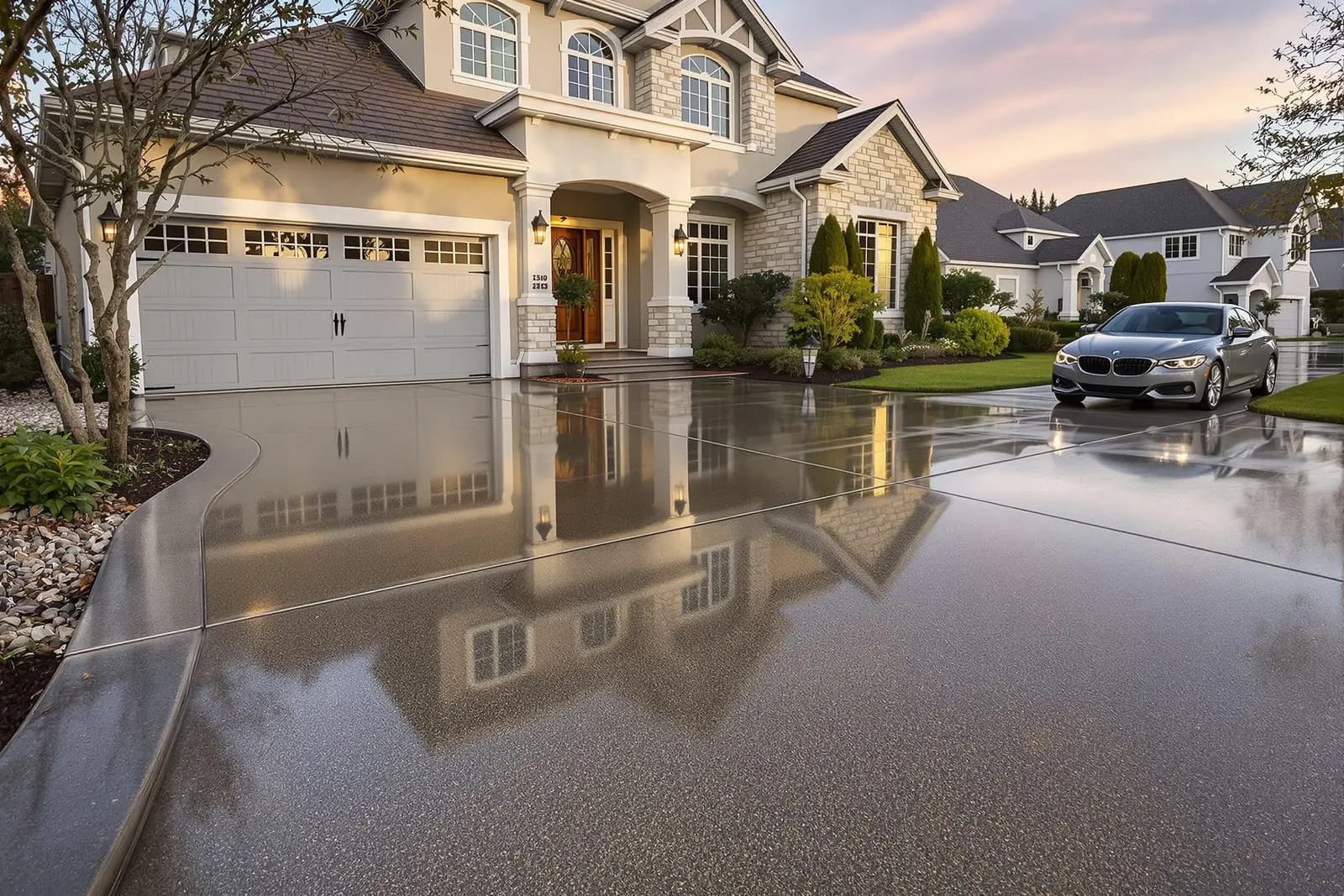
We offer concrete sealing and maintenance in Nashville, TN to protect your investment. Quality sealers help resist moisture, stains, and freeze thaw damage on driveways, patios, and walkways. Our team cleans, prepares, and applies the right sealer for your surface. Keep your concrete looking good and performing well with regular maintenance.
Primetime Concrete Nashville provides professional concrete sealing throughout Nashville, TN and the surrounding area. Our licensed, insured crew delivers safe, clean, on-time work with a free estimate before anything begins. Call (629) 317-4022 or request your free quote.
Concrete sealing in Nashville’s real weather
Middle Tennessee concrete takes a beating. Hot sun, sudden downpours, freeze-thaw cycles, road salt near driveways, and red clay soil all work on your slab at once. Primetime Concrete Nashville offers concrete sealing and maintenance that is matched to how concrete actually behaves in our climate, not a one-size-fits-all product.
We look at how your slab is used first. A steep driveway in Bellevue that sees de-icer in winter needs a different sealer than a shaded patio off 12 South that stays damp. Pool decks in Mt. Juliet need slip resistance and UV protection. Interior basement slabs in East Nashville need moisture control. We match the sealer chemistry and prep to the way you actually use the space.
We also look at the concrete itself. Old broom-finished driveways, newer machine-finished garage slabs, colored or stamped patios, and exposed aggregate all react differently to the same sealer. Too thick of a film sealer on tight, machine-finished concrete can peel. A breathable penetrating sealer on a heavily textured stamped patio might not give you the color pop you want. Our crew tests absorbency in a few spots with simple water tests so we know how open or tight your concrete is before we recommend anything.
Most Nashville homeowners we talk to have had a bad experience with sealing at some point: tire marks that lift sealer, peeling bubbles a year later, or a wet look that turned cloudy. We walk you through realistic expectations, what maintenance will look like, and what your concrete can and cannot do. That way you choose a concrete sealing plan that fits your budget and how much upkeep you want to take on.
How our concrete sealing process actually works
Every concrete sealing job starts with surface prep, because the best sealer in the world will fail over dirt, oil, or old failing coatings. Primetime Concrete Nashville begins with a site visit to see stains, shade patterns, standing water, and any previous sealer. If you have a glossy or thick old coating, we test a small patch with a solvent or stripper to see how it responds. In some cases light grinding is the safest way to remove layers without gouging the slab.
We usually start with a deep clean. For driveways and patios, that means degreaser for oil spots, rust remover where metal furniture has left marks, and a concrete-safe detergent. Then we pressure wash with the right tip and pressure so we do not etch the surface. For pool decks and decorative colored concrete we dial the pressure back to protect texture and color. Interior slabs are scrubbed mechanically or with low-pressure rinsing so we do not force water into walls.
Once it is clean, the concrete must be dry all the way through the surface zone. In Nashville’s humidity that might mean waiting 24 to 48 hours after washing. We pay attention to shaded areas, joints, and spots near planters or downspouts that dry slower. Rushing this step is a big reason cheap sealing jobs fail. We schedule sealing when temperatures sit in the recommended range and there is no rain in the forecast for at least 24 hours.
Then we apply the sealer with sprayers, rollers, or a combination, depending on your slab and chosen product. For penetrating sealers, we typically do a flood coat and keep the surface wet with material for several minutes so it can soak in, then back roll to even it out and remove puddles. For film-forming acrylics we apply thin, even coats so the sealer can breathe and cure correctly. On stamped and decorative work we may add a non-slip additive into the top coat on patios, walkways, and especially pool decks.
After application we protect the surface from early traffic, leaves, and water. For driveways and garages, that means no vehicle traffic for at least 48 hours in normal conditions. We leave you with written care instructions so you know when to resume pressure washing, what cleaners are safe, and how to spot early signs that it is time for a maintenance recoat.
Choosing the right sealer for your Nashville concrete
Not all concrete sealing products behave the same, and what works fine on a warehouse slab in another state may be a poor choice for a sloped driveway in Nashville. At Primetime Concrete Nashville, we focus on three main types of sealers, each with strengths and tradeoffs.
Penetrating sealers, such as silane or siloxane blends, soak into the concrete and help repel water and road salts while keeping the surface breathable. They do not usually change the look of your driveway or sidewalk, which is perfect if you want it to stay natural. They are a strong choice for driveways on hills like in Green Hills or Bellevue where ice and de-icer are a concern, because they help reduce scaling and pop-outs without growing slippery when wet.
Film-forming acrylic sealers sit on the surface and can give you a gloss or satin sheen. On stamped patios and colored concrete they make color richer and add that “wet look” many homeowners like. We can also blend in fine texture grains to keep traction on pool decks and steps. The tradeoff is maintenance: in Nashville sun and temperature swings you can expect to recoat every 2 to 3 years if you want to keep the sheen consistent.
For interior slabs, such as basements and shops, we may recommend specialty sealers or light-duty coatings that control dusting and resist spills. These are applied over properly prepared concrete and often need a moisture check beforehand, especially in older East Nashville and Inglewood homes where vapor drive can be strong. Skipping that moisture check is a common reason cheaper coatings blister later.
Cost is driven by three main factors: square footage, how much surface prep is needed, and product choice. Stripping multiple layers of old sealer or grinding a contaminated surface takes more labor and materials than sealing newer, clean concrete. Decorative high-build systems and multi-step color/seal combinations cost more than a simple penetrating driveway treatment. We lay these options out clearly so you can balance upfront cost with how long you want the sealer to last and how much sheen or color enhancement you want.
Concrete maintenance that actually prevents bigger repairs
Sealing is just one part of keeping concrete in good shape. A big part of what Primetime Concrete Nashville does is catch little issues before they become trip hazards or major cracks. During any sealing job we walk the slab and mark hairline cracking, open joints, and low spots where water sits after a storm.
In our area, a tiny crack that gets water in it, then freezes a few times each winter, can slowly widen. When we see cracks that move, we may recommend flexible joint and crack fillers instead of hard patch materials so the joint can still open and close with seasons. On driveways that see heavy trucks or landscaping trailers, we pay special attention to where the slab meets the street or garage apron, because edges tend to chip first.
We also look at drainage. Sealing alone will not fix ponding. If we see standing water on a patio or against a foundation wall, we let you know what is realistic. Sometimes a simple sawcut relief joint, grinding of a high spot, or redirecting a downspout is all it takes to keep water from living on your concrete. In severe cases we might recommend a more involved repair, but we always start with the least invasive option that will actually work.
Routine maintenance in Nashville usually means a light detergent wash once or twice a year, quick cleanup of fertilizer and leaf stains, and avoiding strong acids like straight muriatic acid that can burn the surface. We show you simple tests you can do with water droplets to tell when your sealer is beginning to wear down. If water soaks in quickly instead of beading on the surface, it is time to talk about refreshing the sealer before the slab starts taking damage.
If you live in a neighborhood with an HOA, especially in areas like Spring Hill, Mount Juliet, or new subdivisions south of town, there may be guidelines about appearance changes. A high-gloss sealer on a front driveway could violate rules that require a natural look. We can help you choose a sealer that stays within those guidelines while still protecting the concrete.
What Nashville homeowners should know before hiring a concrete sealing contractor
Concrete sealing looks simple from a distance, but most failed projects we are called to fix come from three things: poor prep, using the wrong product, or applying it too thick. Primetime Concrete Nashville is set up to avoid those mistakes, and we are upfront about what the work involves so you can compare us fairly with other quotes.
First, ask any contractor what they will do to test for existing sealers. If they cannot explain how they will check for old coatings or how that affects the product they choose, be cautious. Putting an incompatible sealer over an unknown coating usually causes clouding, peeling, or whitening. We perform small solvent or water tests in unobtrusive areas, and if needed we strip a small test spot before committing to a full approach.
Second, make sure they talk about cure times and weather windows. In Nashville, sealing in the heat of a direct August afternoon can flash-dry a topcoat before it bonds. In cooler, damp fall weather, products need longer to cure. We plan work around shade patterns and temperature forecasts, not just the calendar date, so the sealer has a fair chance to do its job.
Third, get clarity on how slippery the surface will be after sealing and what options you have. Any film-forming sealer has the potential to reduce traction if it gets wet, especially on smooth or troweled concrete. We can blend in non-slip additives and choose a lower sheen to balance appearance and safety. For sloped driveways or pool decks, we usually insist on some form of traction aid.
Finally, expect a straightforward conversation about maintenance and recoat timing. A good sealing job is not a once-and-done product. We will tell you roughly how long your chosen system should last in our climate, when to think about a maintenance visit, and what small cleaning tasks you can do yourself to stretch that life. That way, your concrete sealing investment in Nashville holds up year after year instead of becoming another quick fix that fails after one summer.
“
Professional concrete sealing & maintenance, done right the first time, quality materials, honest pricing, and results that last.
Primetime Concrete Nashville
Concrete Sealing & Maintenance Across Our Service Area