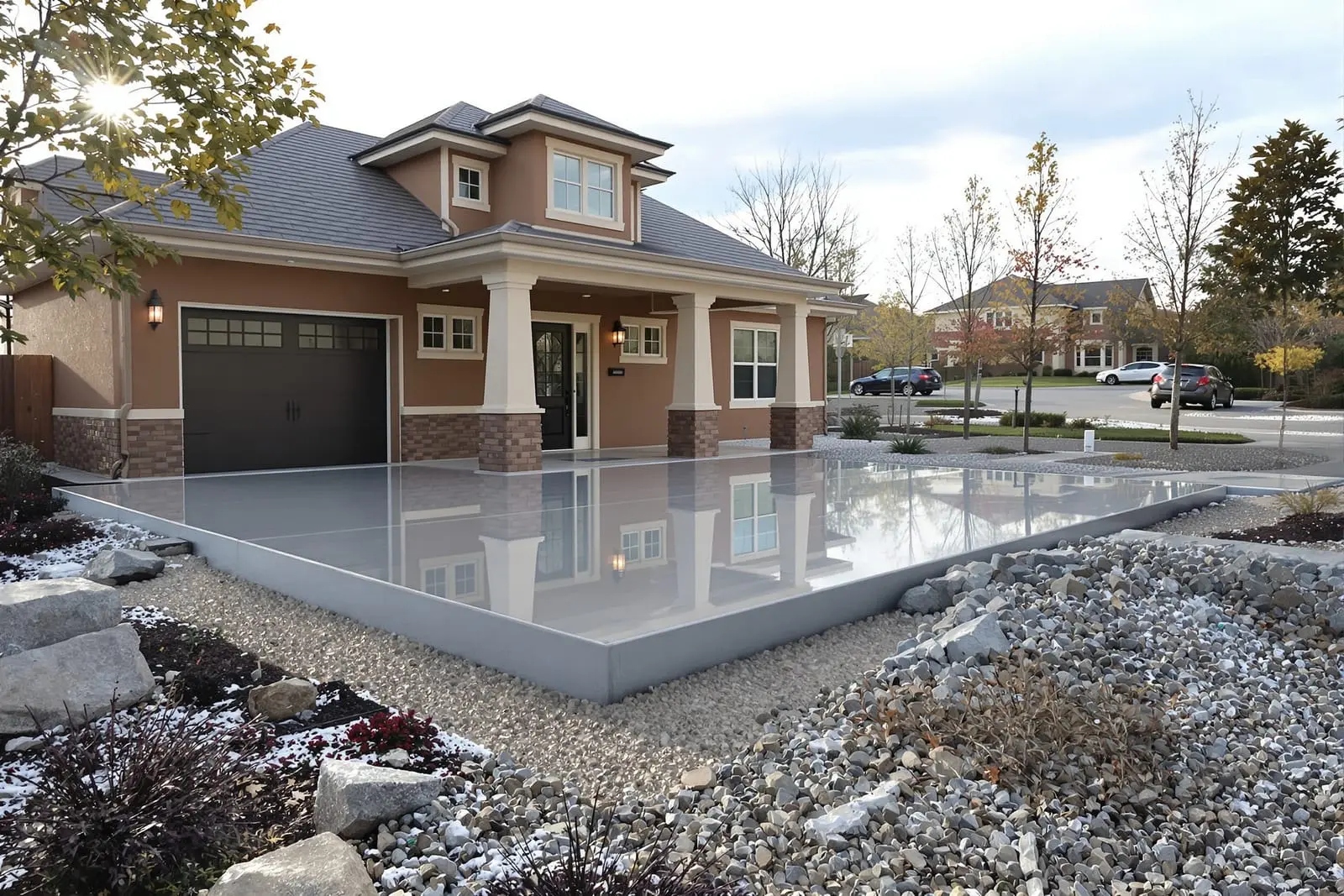
We perform commercial concrete flatwork in Nashville, TN for slabs, sidewalks, dumpster pads, and common areas. Our team delivers consistent grades, slopes, and finishes on every pour. We work efficiently to keep your project schedule on track. Get clean, durable flatwork that handles heavy use and equipment.
Primetime Concrete Nashville provides professional commercial concrete flatwork throughout Nashville, TN and the surrounding area. Our licensed, insured crew delivers safe, clean, on-time work with a free estimate before anything begins. Call (629) 317-4022 or request your free quote.
Commercial concrete flatwork built for Nashville conditions
Commercial concrete flatwork is the working surface of your property: loading docks, dumpster pads, warehouse floors, sidewalks, parking lot panels, and service drives. Primetime Concrete Nashville focuses on building these slabs to hold up to Middle Tennessee heat, freeze-thaw cycles, and the constant traffic you get on a busy commercial site.
For projects in and around Nashville, we look first at how the slab will be used. A retail storefront sidewalk does not need the same design as a forklift aisle in an industrial warehouse. We match slab thickness, reinforcement, and mix design to the actual load. Light-duty walkways and patios may be 4 inches thick, while truck lanes, dumpster pads, and loading areas often start at 6 inches and go up from there. We take into account local codes, building plans, and what Metro Nashville inspectors expect to see, so you are not surprised at inspection time.
Local knowledge matters because the soil on one side of Nashville can behave very differently from another. Sites in Antioch may have soft fill from recent development, while older industrial lots near downtown can have tight, compacted ground or buried debris. Before we pour, we inspect subgrade conditions, check compaction, and discuss any weak spots that may require extra base stone or geotextile fabric to keep your slab from settling or cracking later.
How we plan and pour commercial slabs and flatwork
Every commercial concrete flatwork job with Primetime Concrete Nashville starts with a site visit, not just an estimate over the phone. We walk the project with you, review plans, check drainage paths, and confirm access for ready-mix trucks and finishing tools. In crowded Nashville corridors, like West End or Green Hills, staging and timing can be as important as the concrete itself, especially if you must stay open for customers.
Once the layout is set, we handle excavation, grading, and base prep. For most commercial work we recommend at least 4 inches of compacted crushed stone under the slab to support loads and improve drainage. Where trucks or heavy equipment will operate, we often increase base thickness or improve the subgrade to resist pumping and rutting. We set forms with correct elevations so water drains away from buildings and loading doors, which is critical during heavy Tennessee rainstorms.
We typically use a 4,000 to 5,000 psi concrete mix for commercial slabs, sometimes with air entrainment for exterior work to handle freeze-thaw cycles. For higher loads or faster schedules, we can use mixes with additives that speed up cure times, but we always balance that with workability so we can finish properly. On site, we control slump so the concrete is not too wet, which can weaken the slab and increase surface dusting. Our crews then place reinforcement, whether that is rebar, welded wire mesh, or fiber reinforcement, according to the project design.
Reinforcement, joints, and finishes that prevent problems
The details in commercial flatwork often determine whether the slab lasts 3 years or 30. Reinforcement is one of the most important details. For warehouse and shop floors in Nashville, we commonly install rebar grids, often #4 bars at 12 to 18 inches on center, tied and supported on chairs so the steel stays in the middle of the slab. For lighter duty sidewalks and pavements, welded wire mesh or fiber-reinforced concrete may be enough, but we explain the pros and cons so you understand what you are paying for.
Joint layout is another area where we spend extra time. Proper control joints help manage where the slab will crack. We plan joint spacing based on slab thickness and panel size, typically aiming for nearly square panels. For example, a 5 inch slab might have joints every 10 to 12 feet. We cut or tool joints at the right depth and timing to encourage shrinkage cracks to follow those weakened lines. For large commercial floors, we also look at isolation joints around columns, walls, and equipment pads to reduce random cracking from restrained movement.
Finish type depends on safety and use. In loading docks and exterior ramps, we often recommend a broom finish for traction in rain and during winter freeze events. In interior warehouse spaces we may provide a hard troweled surface that can handle pallet jacks and forklifts without tearing. For restaurant patios, retail entries, or branded spaces, we can do decorative options like colored concrete, saw-cut patterns, or exposed aggregate that still function as durable commercial flatwork.
Nashville-specific challenges: weather, drainage, and scheduling
Nashville weather affects how commercial concrete flatwork should be scheduled and placed. Summer heat can make concrete set too fast if pours are done in the middle of the day without planning. Primetime Concrete Nashville often schedules large pours early in the morning and uses evaporation control practices so the surface does not dry out faster than the slab below. In winter, we pay close attention to overnight lows and ground temperature to protect against freeze damage during the early curing period.
Drainage is a common point of failure on older commercial slabs around town. Standing water in front of roll-up doors or at storefront entries becomes a slip hazard and speeds up surface deterioration. When we design and pour a slab, we build in slopes, typically 1 to 2 percent, to move water to drains or away from buildings. On flat sites, like some industrial parks in La Vergne or Goodlettsville, we coordinate with your civil plans to place trench drains or catch basins so water has somewhere to go.
Scheduling is another real challenge in busy commercial zones like The Gulch or near Broadway. You may only have nighttime access or small windows when delivery trucks are not in the way. We work with local ready-mix plants and your operations team to plan pours that fit your business hours. That might mean phased pours for a warehouse expansion or weekend-only work for a busy retail plaza so you stay open and customers are not shut out by barricades.
Costs, lifespan, and what to ask before you hire
The cost of commercial concrete flatwork in Nashville is driven by more than just square footage. Thickness, reinforcement type, base preparation, site access, and finish all influence the final price. A straightforward 4 inch sidewalk with good access may be on the lower end of the cost range, while a heavily reinforced dumpster pad with thick base stone, tight working space, and night work will be higher. At Primetime Concrete Nashville we break out these items in our proposals so you can see where the money is going.
If you are comparing bids, look closely at specs. Ask each contractor: What slab thickness are you including? What PSI concrete mix? What reinforcement and spacing? How much base stone and what compaction standard? Who pays for concrete testing if it is required by the city or your engineer? Cheaper quotes sometimes hide thinner slabs, no base, or light reinforcement that shorten the life of your flatwork.
Also ask about curing practices and warranty. Curing is what allows concrete to reach its designed strength. On commercial slabs we often apply a curing compound or maintain moisture for the first 7 days, especially in hot weather. This reduces cracking, curling, and surface dusting. We will give you clear guidelines on when you can walk on the slab, when light equipment can roll across it, and when heavy trucks or storage racks are allowed.
Finally, make sure your contractor is familiar with Nashville codes, permits, and inspections. For projects involving public sidewalks, ADA ramps, or work close to the street, you may need Metro approval and specific details like detectable warning panels and exact ramp slopes. Primetime Concrete Nashville deals with these local requirements regularly, which helps your job pass inspection and keeps the project on schedule.
“
Professional commercial slabs & flatwork, done right the first time, quality materials, honest pricing, and results that last.
Primetime Concrete Nashville
Commercial Slabs & Flatwork Across Our Service Area